Showing posts with label Personal. Show all posts

Sunday, June 19, 2005

Allaboshi Ficacious!

 Dad in his replica flight jacket
Phone Call

Well, of course I called my Dad today for Father's Day.  Much of the conversation was about my brother, a continuing source of worry to my Dad, to Ruth (my stepmother), to me and to my Mom when she was alive.  I don't want to tell the whole story here; in fact, I don't think anyone even knows the whole story.  Suffice it to say that Steve hasn't had a job as a computer programmer in years and years, currently works part time at Dillard's, and recently failed a course in nursing school.  Dad plays the tuition, and is understandably concerned.

Besides Steve, we talked about his Father's Day gift that didn't arrive on time (my Dad is very forgiving about such things), my new job, and Dad's opinion that when it comes to education and money and careers, I'm "doing it right."  There was no discussion of health issues (Dad is very healthy for his age), or of the lease at the railroad museum, or of the CPA exam I'm not studying for.   I didn't even mention my tribute to him in this journal this past Thursday.  It would only have embarrassed him.

Another thing we didn't discuss was the past.  There was no reminiscence about my childhood, or World War II.  My Dad likes to look ahead, not back.  A propos of Steve, Dad did mention in passing that he used to be in charge of educating thousands of adults at Syracuse University, "so I know it can be done."  I did it, finally, and Steve graduated on the first try back in 1972.  But Steve's further education isn't going as smoothly.  That was the extent of the reminiscing.

Still, there are things about Dad that I'd like to reminisce about.  Since I don't do it with him very often, you guys get to read about it instead.

Things My Father Told Me

When I was growing up, my Dad had a seemingly endless supply of silly stories, poems and expressions that he would drop into the conversation from time to time, for his own amusement and mine. One of them was an endless loop joke:

It was a dark and stormy night.  The Captain said to the first mate, "Tell us a story." And this is the story that the first mate told.  "It was a dark and stormy night.  The Captain said to the first mate...."


Dad on his birthday in 1986.For the Fourth of July:

I've got a rocket,
In my pocket.
I have no time to stay.
Away she goes!
I burn my toes!
It's Independence Day!"


and

I asked my mother for fifty cents
To see the elephant jump the fence.
He jumped so high,
He touched the sky,
And he never came back 'til
The Fourth of July."


Except that once I memorized the latter poem, my dad made me laugh by pulling the old switcheroo:

And he never came back 'til
The fourth of August.


There was also a bit about Jo-Jo, the Dog-Faced boy:

He walks!  He talks!  He crawls upon his belly like a reptilian monster!  And for just one thin dime, the tenth part of a dollar, you can see it all on the inside!

As I said, silly stuff.  He also had "Cantelope, I'm married," and "Lettuce have lettuce!" and other wordplay.  But my favorites were the nonsense words.  I don't know whether it's a real word, but a person who behaved stupidly might be called a stupnagel.  Other people had their thingamajigs and their whatchamacallits, but Dad told us to "put the fortescue on the ritaplat," or to pass him the scrangemafortis.  And from time to time, he'd tell us, "Don't be so allaboshi ficacious!"

I asked him about this last one a couple of times in recent years.  Turns out it's part of some longer nonsense that he picked up from his dad or something.  Unfortunately, I haven't managed to memorize the long version, so I can't pass it on.  I don't have a kid to pass it onto anyway.

But if YOU would like to start saying the short version, you have my permission!

Karen

Thursday, June 16, 2005

Two Mealtime Stories About Dad

Dad and me, late 1957 or early 1958Weekend Assignment #64: Tell us about a moment with your dad that serves as an example of one of his best qualities. That would be a personal moment between you and dad.

Extra Credit: Pictures, naturally -- perhaps from right about the time you were born.- J.S.
 

I'll do the picture explanations and a brief bio first, and then tell a few stories.  Like last week, I'll limit myself to two of them.

I've written about my Dad before, of course, and posted most of these pictures before.  How old do you figure I am in that first one?  If the answer is less than nine months old (and I was not a healthy infant, so I may have started off a little small), then this picture is from 1957.  The house was on York Road in Dewitt, NY, a couple of blocks behind Genesee Street. My dad, Dr. Frank E. Funk, was an assistant professor in the speech department at Syracuse University when we lived there.  In 1961 we moved to Manlius, and in 1965 he became assistant dean of University College at S.U.  By the early 1970s he was Dean of U.C., and Director of Continuing Education at S.U. 

Since "retiring" he's been president of the Wilmington Railroad Museum, a reader to the blind (on tape), and an elder and recording secretary at his church.  And oh, he's an N-scale model train hobbyist.  Dad and Ruth, my stepmom, have now been married longer than my parents were married to each other--and much more happily.  He still volunteers and travels, and works out every day when he's home.
1971The second picture is of Dad and me on vacation in 1971.  My brother Steve almost certainly took the picture.  It was a ferry ride, but I couldn't tell you whether it was in the Adirondacks or the Thousand Islands or someplace else.  Come to think of it, this was probably Cape Cod.  I took a whole roll of film that summer of Cape Cod architecture.

The third picture is from March, 2005, when Dad came to Tucson for my graduation from University of Phoenix.  My baccalaureate degree took 30 years from start to finish, including about a quarter century of being four incompletes short of a degree from Syracuse University in English Literature and Film.  One of my reasons for going back to school was so that my dad the educator could finally see his kid graduate.  A bad printout of this photo, taken after the ceremony by John with our then-new Canon digital camera, is currently on display inside one of my  three mousepads at work.  It's the one I actually use as a mousepad.

The last two pictures are from the same weekend as the graduation photo.  It's of my dad at Old Tucson Studio, sort of a combination movie set and theme park.  The little observation tower he's climbed up in is supposed to afford a good view of Old Tucson's arson-damaged steam locomotive.  Dad later snuck past the ropes for a closer encounter, as shown here.  Considering the grant proposals my dad has written to help restore a steam locomotive at the museum, the staff of Old Tucson need not fear for the safety of their train at the hands of my dad!

Okay, stories.  If you want light-hearted, read the first one and then skip to the end.
March, 2005.My mom was in and out of the hospital in the early 1960s with encephalitis and other medical problems. That may or may not be why she wasn't around the day I first read Green Eggs and Ham.  I liked the book a lot, and probably read it aloud to my dad. My dad then made green eggs and green ham for dinner that night.  I wasn't so sure the ham needed to be green, since it doesn't say so in the title, but Dad insisted.  He prepared the sliced ham and fried eggs with Easter egg food coloring.  He made sure I knew this so I wouldn't think there was something wrong with the food.  It didn't occur to me until tonight that he may have actually planned the meal rather than thrown it together on the spur of the moment.  What are the chances that we happened to have ham in the house as I read that book?

Fast forward about 40 years. This time, my mom wasn't in the hospital.  She was living in an adult care home.  It was Thanksgiving,  November 28th, 2002, the worst day of my life. I didn't know it yet, but my mom had less than three weeks to live.

There was something mysterious and awful going on in my mom's brain toward the end of 2002.  She was only half-conscious most of the time,  flopping like a rag doll  in my car or in her wheelchair, largely oblivious to her surroundings.  Medication changes may have made things worse, but it's impossible to know for sure.  There were lots of doctors and lots of tests, but no clear results.  I'd taken her to a cardiologist, a neurologist and a psychiatrist, an eye doctor, an orthopedist and an ear specialist, and to the hospital for an EEG--during which she had a seizure, while I was prearranging her cemetery plot a mile away.  But the worst day of all was Thanksgiving, the day of the horror show.
Dad looks at the train.I was a few minutes late picking her up, and Rosa had to keep reassuring her that I was coming at all.  But when I served the meal I'd been cooking all day, Mom couldn't eat it.  She'd slowly move her fork toward the plate, and slowly bring it up again and put it in her mouth, almost invariably with no food on the fork.  She said she couldn't see the food.  She did this over and over, for about forty minutes.  I didn't hand feed her.  Maybe I should have, but I didn't.  I couldn't.  Then I went out to the car, and called my Dad on my cell phone.  He listened and was sympathetic.  He had no magic answers, but he was there for me, and the conversation helped me a lot. I can't remember whether I took Mom back to the adult care home or John did it for me.  But I remember crying on the phone with Dad.

Eighteen days later, my dad spent over $1100 to fly in for the funeral of a woman he'd been estranged from for 26 years, a woman who sometimes claimed to hate him.  He did it for me, and I was grateful to have him there.  He was wonderful.  It was great having a parent around who was still alive and well, still enjoying life, still taking care of himself, and still interested in my welfare (which my mom was, also, even at the end of her life). 

The following Mother's Day, my dad called me.  "I know this is the first Mother's Day since you lost your mom," he said, "and I thought it might be a little difficult for you."  How right he was--and how thoughtful and wonderful he was to call!

My dad's not perfect, of course.  Nobody is.  There were times when I was growing up that we didn't get along very well.  But when it's really counted, my dad's always been there for  me.


That's the end of my stories for today.  Remind me sometime to tell you about my Dad at the Louvre, the James Bond New Year's Eve, and about my dad being so allaboshi ficacious.
Dad and the train. Don't worry, folks, he helps to restore these things in his spare time.

Karen

My Favorite Veteran

As Many Wars As People Who Were There

The Aging Lottery

Tuesday, January 18, 2005

George: The Rest of the Story

I'm strapped for time tonight (I'm behind on my homework, as usual), so I'll take this opportunity to finish off my tale of outrage and woe from my time working for George twenty years ago.  The following is partly cribbed from one of the ethics papers I wrote last week, and illustrated with the blurry photos of Store #1 that I managed to find tonight.
As you may recall, George is the one who gave me grief instead of sympathy after I did my best to protect his interests while being robbed at gunpoint.  But that's far from the sum of my complaints about my former employer.

part of my contest-winning Prince display George's basic stance was that if anything went wrong, it was somebody else's fault.  He made unreasonable demands, and pounced if you didn't meet them.  Certain favored employees were treated well, while the rest of us were criticized at every opportunity.  "I have to be perfect this week" was something I often said to myself, as I tried to avoid the man's further wrath after some real or imagined mistake on my part. 
The unfair and preferential treatment issue can be illustrated by the bonus program he set up circa 1984.  George forbade anyone to take notes about it (Sue did it anyway), deliberately set the goals so high that certain stores could not possibly meet them, and fudged the numbers so that only two of the six stores got the bonuses--including the small one managed by, you guessed it, his favorite employee.

The morning checklist was another good example of the problems George's employees faced.  This was a list of about twelve or fourteen tasks to be done in each record store each morning, from setting up the register and opening the door to vacuuming and dusting.  To do it all with with reasonable diligence would require about forty minutes of steady work, if nobody came into the store in all that time to demand your attention. So, when George came into a store and said, "Take fifteen minutes this morning to do a really good checklist," he was clearly asking the impossible.

Which leads me back to the other incident I started to tell you about last week:

Where's the sorceror's apprentice when you need him?The Set-Up:

As you may recall, I was managing Store #1 at a time when the company was having severe cash flow problems.  To stock his other stores with records, even though they were catalog titles rather than current bestsellers, George decided to remove all the records, prerecorded tapes and just-invented CDs from Store #1. We then moved the record bins around to create a smaller sales floor, kicking up dust in the process, and stocked it with silk wall hangings, T-shirts and other peripheral items.  I spent the rest of the morning and afternoon cleaning, and then passed this task on to Chris to do all evening as well.

Part of my contest-winning Springsteen display. Note the ticket counter, an obvious target for robbery.The next day, George demoted me from shift supervisor (and de facto manager) to ticket girl, in an attempt to goad me into quitting. The excuse given was that on the day after the record bins were moved, Store #1 was a dusty mess.  I'd dusted my heart out, trying to mitigate the fact that moving furniture after eleven years will inevitably put dust into the air, which will eventually settle again all over the place.  Clearly I was not at fault, but George never let facts or fairness get in the way of a good scapegoating. My ethical dilemma was this: should I allow myself to be maneuvered into quitting, bringing economic hardship on my family but saving George money, or stay and defend myself against the false charges?

The decision hinged on both ethical principles and practical ones:

Ethical Principles:

1. Altruism.  Despite everything, I still felt some sympathy toward George, and knew that his financial situation was poor.  Removing myself from his payroll would help the company stay afloat a little longer.  This would benefit George and his remaining employees, who would be more likely to get their paychecks. However, quitting before I had another job prospect would financially harm another innocent stakeholder, my own husband, John. George was far from innocent, but his employees deserved to be paid.  The greater good seemed in this case to indicate that, as Spock famously said in Star Trek II: The Wrath of Khan, “the needs of the many outweigh the needs of the few—or the one.”

2.  Integrity.  To make a stand for truthfulness, another ethical value, can be an act of integrity, especially if a person behaves this way consistently. Although I am sometimes guilty of not volunteering uncomfortable truths, I try never to lie to anyone. To allow George to lie about why he wanted me to quit, impugning my workmanship and my truthfulness in process, was an affront to my sense of integrity.  To quit seemed at the time to be condoning his lie, but it could be argued that accepting the demotion and staying on gave the lie equal creedence.

Practical and Selfish Considerations:


Store #1, featuring the Prince display again. Arguing for my quitting was the opportunity to selfishly reduce my stress over a job that had become nearly intolerable, and take a “vacation” from working while I looked for another job.  On the other hand, a self-serving motive for not quitting was a desire to avoid a loss of income.  Another was my psychological need to defend myself from George’s false changes.  It may be argued that refusing to quit was to make a stand for the truth, but there was a selfish component to this stance.  Furthermore, neither alternative was likely to cause to George admit the truth.  In addition, there was a temptation to “spite George” by refusing to do what he wanted, a vengeful, malicious, unethical (but psychologically understandable) response to the situation.

Alternatives and Consequences:

There were only two alternatives in this situation: to quit, or to refuse to quit.  Quitting would have the negative consequence of reducing my family’s income, and the positive consequence (for others) of reducing company expenses, enhancing George’s ability to meet payroll. It also would give George the opportunity to disparage me to other employees, without me around to refute his claims.  Refusing to quit would protect my household income, keep me on hand to protect my reputation, and thwart George’s dishonest behavior. The negative consequences would be increased stress for me, more strain  on company finances,  which would ultimately harm other employees, and the possibility of being fired.

The Decision:

Initially, I told George that I could not afford to quit until I found another job. After this conversation, however, John encouraged me to quit, saying that we could manage without the income for a short time. I called George back and quit. I even wished him luck.  Afterward, I found myself getting more and more angry with him.  I was tempted to call George again and berate him for his dishonesty, but John convinced me to let my previous, “classy” last words to him stand.  (When I mentioned this to John last week, he was amazed that he ever said such a thing.)

The Aftermath:

I soon got a job with National Record Mart, where I was appreciated and treated well. I kept that job until John and I left town on our big trip of 1986, driving around with Jenny Dog, looking for a place where it wasn't winter.

Some time after I Ieft town, George was arrested for check kiting.  In an effort to keep the record store chain going, he and his wife had written over eight million dollars in checks back and forth between two overdrawn accounts over a period of six weeks.  I guess the $4.00 an hour he saved by getting me to quit wasn't enough to save him.


Karen


See also:
Bashing George
Robbery, Part Two

Wednesday, August 11, 2004

Legacy

For nearly forty years now, I've been carrying things around in my head that nobody else alive today is likely to remember, with the possible exceptions of my brother and one or two former members of Syracuse Little Theater. My mom, Dr. Ruth Anne Johnson Funk, was a composer and a lyricist, a director and a satirist. (She was also a clinical psychologist and an educator.) I still remember most of the songs and some of the dialogue from her 1960s musical revues, DeManleyville (1964), DeManleyville '65 and They'd Rather Be Right (1968). Here's a sample from one of the songs in DeManleyville / DeManleyville '65:

excerpt from John Burp Marching Song

Let's take the Red out of Red, White and Blue;
America, we'll be true!
The only patriots left are me and you -
and I'm not too sure of you.

--from DeManleyville (1964)

This was the Cold War era, remember. Joe McCarthy was no longer a major force, but there were still accusations that a peacenik (for example) was a Commie Pinko, or whatever term was in vogue that year. That first show satirized a few carryovers from the 1950s, including the Happy Homemakers ("We adore keeping house; it's the thrill of our lives/And we freely admit that we're all perfect wives") and the Beatnik Mama ("In matters intellectual, she's strictly nowhere.") Other targets for the satire were automation, bridge players and General Electric ("But now you've gone and transferred him/And your light in our heart's growing dim").

By 1968, the political and social climate had changed a bit. The former Beatnik Mama was now Rockin' with the Viet Cong. Mom included a slide show memorializing Robert Kennedy and Martin Luther King, Jr., accompanied by Requiem for the Masses by the Association. (One night a member of The Association showed up for the performance, and Mom was thrilled.)

They'd Rather Be Right included a new satirical song for each of the surviving major candidates: Richard Nixon, Hubert Humphrey, Eugene McCarthy and George Wallace. The songs were The Newest Richard Nixon ("Has he changed since Checkers was a pup?"), Saint Eugene ("A man of monumental calm/Except on Viet Nam"), Lonesome George ("But would you let your daughter marry him?") and the Hubert Humphrey Blues:

When he's not on tv, I hit bottom.
Tell me, is it fair that Johnson's got him,
And Muriel is stuck with her cigar?
I would gladly share him with another,
singing praise to apple pie and mother.
Tell me how to shake this hang-up, brother,
For I've got the Hubert Humphrey blues!

--from They'd Rather Be Right (1968)


Here's a sample of the dialogue, from a sketch in which a female suburbanite is accused of being middle class ("Oh no! Not that!). I've been thinking about it since I wrote last night's entry about guilt that I'm not out saving the world:

Prosecutor: Do you lie awake at night on your silk sheets--
Defendant: Percale. I got them on sale at--
Prosecutor: In your silk sheets, knowing that thirty million people in America live below the poverty line?
Defendant: I gave to the Salvation Army.
Prosecutor: Thirty million people!
Defendant: And the Community Chest.
Prosecutor: Do you or do you not read William F. Buckley?
Defendant: Whenever I can find a dictionary. You're right. I'm guilty!
--from They'd Rather Be Right (1968)


Over the years there were also love songs, a song about the empty nest syndrome (I think that was in DeManleyville), and even a ballet about a lame little girl who was able to dance with her doll-come-to-life when the clock struck midnight. My doll, Tootles, played the inanimate version of the doll, and I, in a matching outfit, played the doll come to life. I was eight years old, and at least as clumsy as I am now. Trying to learn and perform the simple choreography just about killed me.

Dr. Ruth Anne Johnson Funk, 1950sNow, here's the point of all this nostalgia. For all these years, I've treasured my mom's music and her comedy, with the possible exception of some material she wrote for my school drama club when I was in seventh grade. But looking back now, I'm suddenly finding I have a slightly different perspective. I've always thought of my mom as a Johnson Democrat - pro-Viet Nam War, pro-equal rights, but perhaps a little to the right of my own political views (and believe me, I'm not exactly a Deaniac myself). But thinking now about the out-of-date satire, I'm seeing underlying attitudes that I didn't notice at the time, and don't necessarily share now. I would have voted for Humphrey over Nixon too, as my mom did, but I don't quite approve of a sketch in which a teacher is arrested for saying a childish prayer.

Hmm. Weird. All these years later, I'm reassessing the legacy. I'd like to discuss the old satire and the old politics with my mom, but it's too late for that. She died in 2002.

Karen

Ruth Anne Johnson

The Aging Lottery

Thursday, June 10, 2004

Had Dog, Did Travel

Jenny, bed and van, 1986. Photo by John Blocher.

This is Princess Guinevere of Westcott Street, better known as Jenny Dog, Jen-Jen, Trouble Dog or even Dognose. She was the first and smartest dog I ever had. When I heard about
the dog with the large vocabulary on NPR today, I thought of Jenny immediately.

She arrived under my slumlord ex-boyfriend's jacket in 1978, the progeny of Bob's hideous curly-haired gray dog whose name I've since forgotten. Bob called my puppy Princess. I lived on Westcott Street and was a T.H. White fan, so now you know where the long version of her name came from.

When she was a puppy, Jenny used to come with me on the 15 minute walk to Liz's house. Syracuse University paid me $10 a week to read textbooks to Liz, a blind grad student at the School of Social Work. Once when I tried letting Jenny go outside on the honor system, she immediately took off for Liz's place. I had to get dressed and follow her there.

Jenny was the mascot of my used record store, Rockarama (1979-82). One day, a meter reader threatened to kill her because she barked at him. I called and reported him to the gas company.
Jenny's favorite Christmas present, aside from food, was balloons, which she used to chase until they popped in her mouth or under her paw. Then she would look at us expectantly, and wait for us to blow up another one.

In 1986, my husband John and I put a mattress in the back of our 1984 Dodge van, put most of our other possessions into storage, and drove around the country looking for someplace it wasn't winter. It was cold and windy even in Florida that February, and the Florida Keys gave me severe allergy problems. We eventually made our way as far north as Montreal, where it was really winter. Jenny spent the trip on the bed in theback of the van, coming out to frolic in the snow at Niagara Falls or check out the ocean. (We really got around that year.) At one point we were following what was left of Route 66 through Oklahoma when the road dead ended at a cemetery. Cows were hanging out there. "Look, Jenny! Cows!" we said, and Jenny barked. She liked to bark at cows.

Jenny knew the commands Jenny up! Get down! Jenny come! Get the stick! and I forget what else. The particular way we had of calling her ("Jenny dog!") got translated into notes (think of the first three notes of Ring Around the Rosy, or Nyah-Nyah-Nyah-Nyah Nyah Nyah!), which after a while we whistled to call her instead of using words. If you ever hear a woman whistling those particular notes in a grocery store, that's me calling John away from the magazine rack. Several other voice commands also became whistles, which Jenny responded to just as readily as the spoken words.

I loved Noodle, who came along as Jenny was wasting away from Cushing's Disease, and I love Tuffy, our present dog. But Jenny was special.

Karen


Five Things that Dogs Are Telling You, and Four Things That Dogs Want

Don't Forget the Dog! (journal entry about Tuffy Toro)


Tags: ,

Thursday, May 6, 2004

Seven Ancient Wonders of Manlius, NY

I haven't been to Manlius, NY in at least 18 years, possibly as long as 25 years. I lived there from the time I was four years old (1961) until halfway through my freshman year in college. Despite my long-ago personal list of The Seven Wonders of Manlius, I was not unreservedly fond of the place. This was partly due to my poor social standing at school, and partly due to the Manlius edition of the lousy Syracuse weather, with its snow, wind, and 87 sunny days a year.

Nevertheless, I miss the place sometimes. I can't help wondering what it looks like now, and whether any of the places where I spent my time growing up are still there. Manlius Elementary became village offices or something even before I left Syracuse; Pleasant Street Elementary was, I think, torn down; and Manlius Hardware, where I bought a horse figurine of painted metal, burned down a very long time ago. Broaster Hut moved, giving way to What's Your Beef? next to the Swan Pond. And I can only hope that the infamous Arly's Hotel was rehabilitated into something with a better reputation.

That leaves the P & C and adjacent pharmacy, at the latter of which I bought LPs by the Monkees; the Manlius Library, where I tried and failed to read Madeleine L'Engle's adult novel Ilsa, and in front of which Dan Cheney's father was hit by a truck; St. Ann's Catholic Church, the larger but less aesthetic building built in the1960s to replace the one in which Steve and I had to stand at the back if we were late; the seasonal ice cream stand Sno Top ("Watch for our humdinger opening next spring!"); Temple's Dairy Store, where large numbers of children stopped after school for root beer barrels and Tootsie Rolls; and Weber's Department Store. The one I wonder about most often is Weber's, possibly spelled Webber's. I don't remember for sure. It couldn't still be there, could it?

This was Manlius' 1960s equivalent of a general store. No, there were no pickle barrels or sacks of feed grain: this was a baby boom suburb, not a relic of the deeper past. It consisted of three rooms on Seneca St. The western room held school supplies, blue glass, Evening in Paris perfume and small toys. The middle room held greeting cards, china animals for my collection, and Breyer horses for Barbie to sit on. The eastern room had jeans, scout uniforms and other basic clothing to tide people over until they could get to Shoppingtown or Shoppers' Fair in DeWitt. I don't remember which room had the candy.

Mr. Weber usually presided over the middle room.

These memories of mine are over thirty-five years old, but it seems even longer ago. In 1986, Route 66 actor George Maharis told me that when he and Martin Milner were traveling the country for their tv show (starting in 1960), every place had its own customs and character. "Now you can go anywhere you like,"he said, "and it's a Denny's." In a world of Denny's and Olive Garden and Old Navy, I don't think it's at all likely that Manlius still has a non-chain department store that carries Breyer horses. Swan Restaurant, where we used to occasional have spaghetti, is long gone. I have very little hope for Temple's. The "haunted" house at Fayette St and High Bridge is long gone. Manlius Theatre, the one screen movie house where I saw The Incredible Journey and later Bananas, is apparently still there, and the Swan Pond is probably still there, but that's probably about it for my childhood landmarks.

If someone who still lives in Manlius finds this post, I'd appreciate hearing from you about what's there now and what is gone. Please email me at mavarin2@gmail.com.

Karen Funk Blocher
Fayetteville-Manlius High School, class of 1975.
[email updated 10/13/2014]

Thursday, April 1, 2004

Web Update


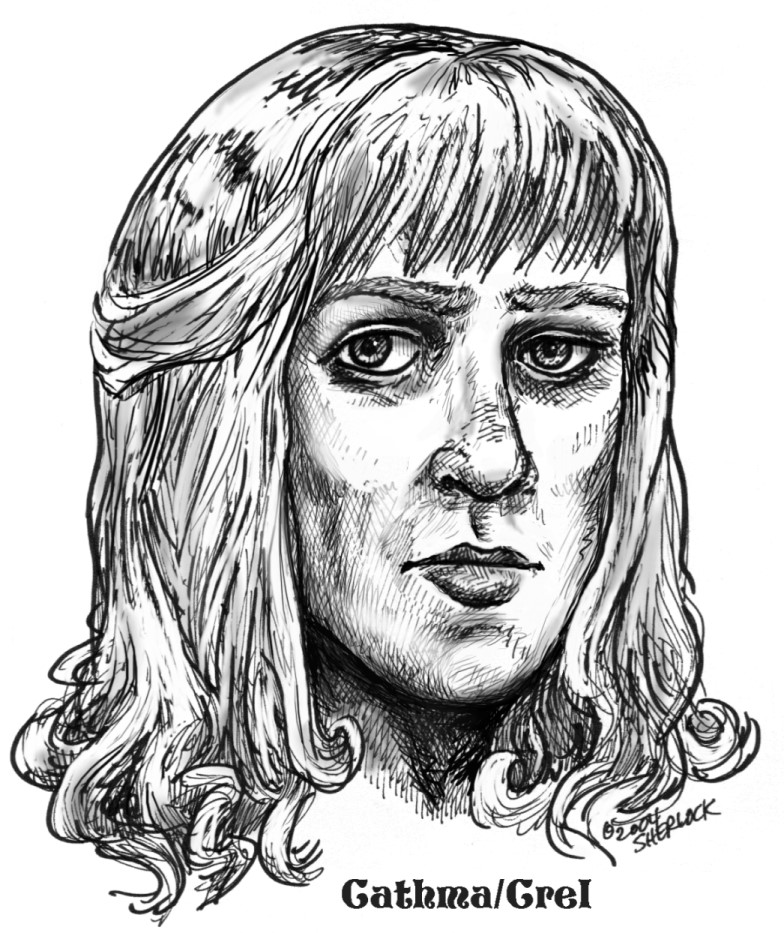
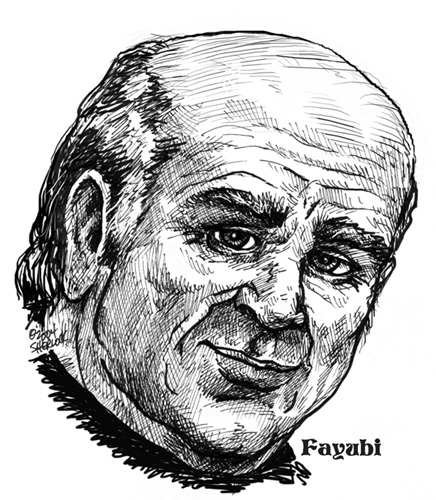
All 11 of Sherlock's illustrations of Mavarin characters are now on http://www.mavarin.com/. Character profile pages will follow soon. So far I've added one for Cathma and one for Fayubi.

In other news, I got a B in Intermediate Accounting III. That's the first course since I went back to school for which I didn't get an A. 12 As, one B. What's my GPA now?

Karen